
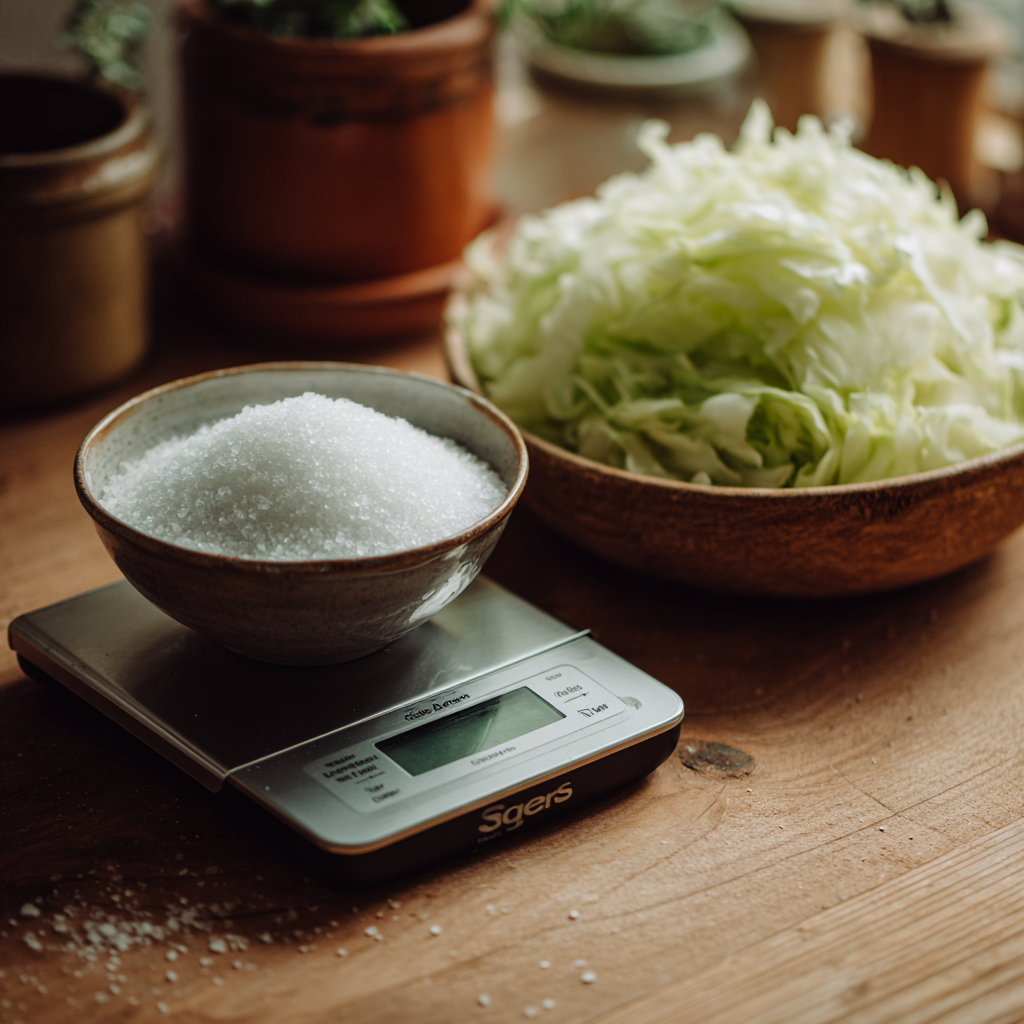
Salt is the only thing standing between a clean ferment and a ruined one. Get the ratio right and your vegetables stay crisp, safe, and full of life. Get it wrong and you end up with mush, mold, or a jar that tastes like seawater. The salt ratio is the entire foundation of fermentation. Everything else is secondary.
For fermenting vegetables, the standard salt ratio is 2 percent by weight. That means 20 grams of salt for every 1 kilogram of vegetables. This ratio works for nearly all vegetable ferments and produces a safe, reliable ferment.
Most vegetable ferments work best in the two to three percent range. That is the zone where bad microbes stay quiet and the good ones take over.
Quick Reference Chart
| Vegetable Weight | 2% Salt | 2.5% Salt | 3% Salt |
|---|---|---|---|
| 500g | 10g | 12.5g | 15g |
| 1000g (1 kg) | 20g | 25g | 30g |
| 1500g | 30g | 37.5g | 45g |
 Old School Tip: Salt by weight, not by spoons. A tablespoon of fine salt is not the same as a tablespoon of kosher. A cheap scale makes all the difference.
I’ve ruined enough batches over the years to say this with confidence: getting your salt ratio right is the most important step in home fermentation. Once you understand why salt matters and how to measure it, everything else becomes second nature.
Why Salt Matters
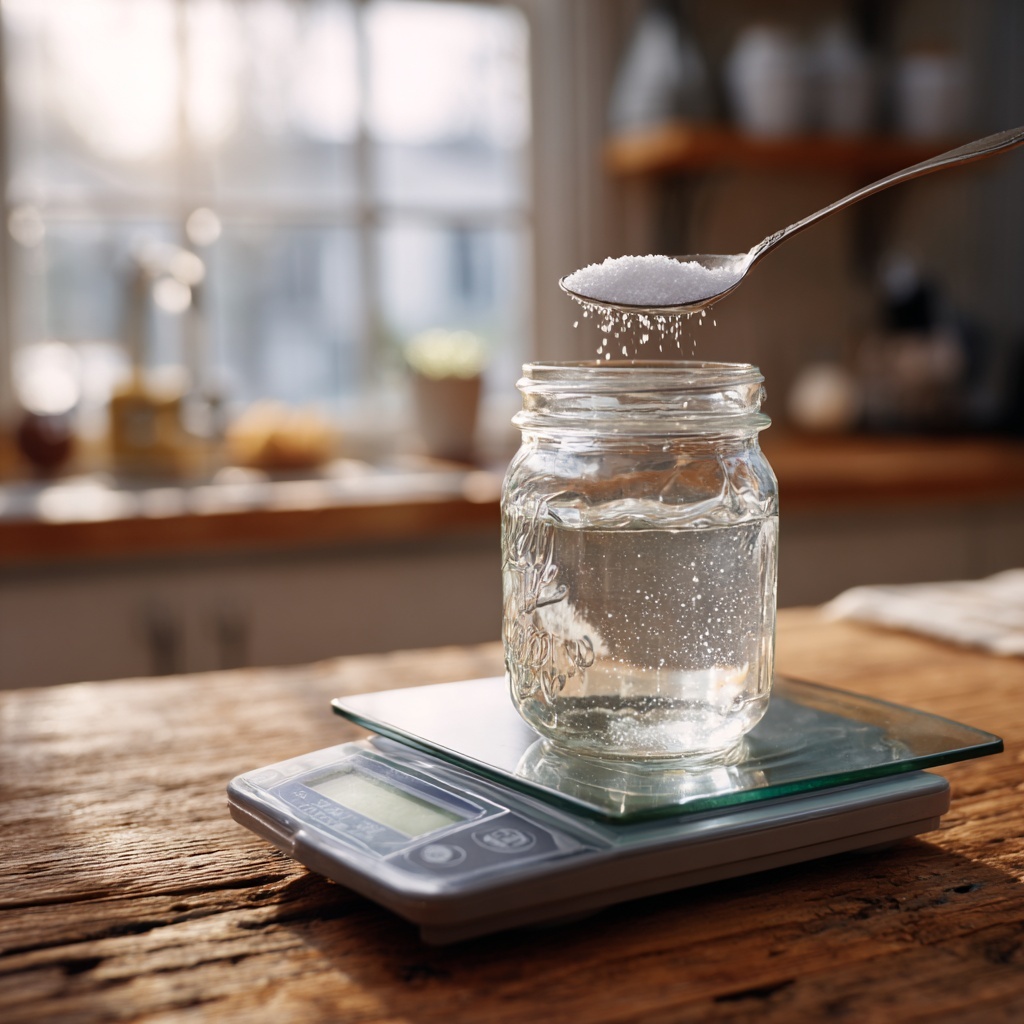
Salt does far more than season your vegetables. It controls the whole microbial world inside your jar. When you add salt, you’re pulling water from the vegetables through osmosis, creating a salty brine where beneficial lactic acid bacteria thrive and spoilage organisms can’t.
Modern research backs up what the old timers always knew — the right salt level directly shapes which bacteria survive and how flavor develops. A 2020 study published in Frontiers in Microbiology showed that even small changes in salt concentration can shift the balance between good and bad microbes during vegetable fermentation. Without enough salt, the wrong microbes take over. With too much, friendly bacteria struggle to do their job. The magic lies right in the middle.
The Fermentation Equation
The math for perfect fermentation is simple and it never changes:
Salt in grams = Total weight in grams × Salt percent ÷ 100
A one thousand gram batch at two percent needs twenty grams of salt.
Does the Weight Include the Liquid?
That depends on the type of ferment:
- Dry-salted ferments (sauerkraut, kimchi):
Measure only the vegetables. The salt pulls water out to make its own brine.
Example: 1000 g cabbage → 20–30 g salt. - Brine ferments (pickles, carrots):
Measure the total water plus vegetables.
Example: 800 g vegetables + 1200 g water = 2000 g → 40–60 g salt (2–3%).
If you prefer the simple old way, measure just the water for brined ferments — that’s how most farmhouse recipes were written, and it still works.
Old School Tip: “A handful of salt per quart of water” works out to about 2.5%, which explains why it never failed the old timers.
Choosing the Right Salt
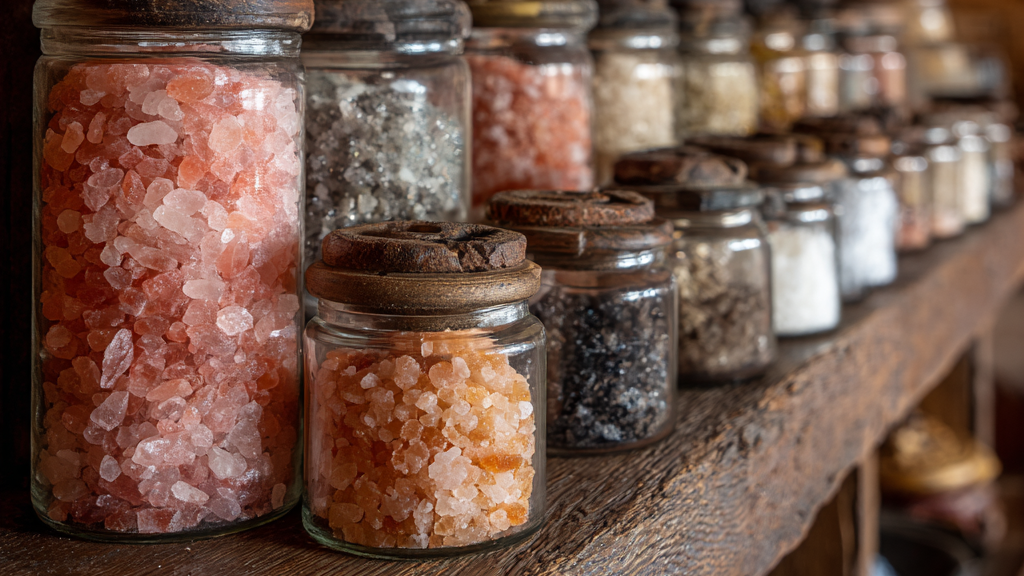
- Sea Salt: Pure, mineral-rich, and reliable.
- Kosher Salt: Excellent for brining; avoid additives.
- Himalayan Salt: Fine, but minerals can tint brine.
- Table Salt: Avoid iodized or anti-caking types if possible.
Old School Tip: If your great-grandmother wouldn’t recognize it, don’t use it. Stick with plain, clean salt.
Adjusting Salt for Taste and Temperature
Cooler weather favors slower ferments, so 2% is fine.
Warm weather speeds things up, so bump it to 2.5–3%.
Old School Tip: “If the house is hot, add a pinch more salt.” Still good advice.
What Happens When You Get It Wrong
When the balance tips, fermentation slows or spoils. Too much salt holds the good bacteria back; too little lets the wrong ones in. The result is either bland and slow or soft and sour for the wrong reasons.
If you’ve had a batch go bad, read 7 Common Fermentation Mistakes for quick fixes.
If your kraut turned out too salty, see Why Your Sauerkraut Tastes Too Salty for how to bring it back in line.
The Bottom Line
Salt protects, flavors, and balances your ferment. Keep it simple: 2–3% by weight, clean salt, patient time.
Old School Tip: Label every jar with the date, salt %, and ingredients. When you get it perfect, you’ll know exactly how to do it again.
Now you know how much salt for fermenting vegetables gives the perfect crunch and flavor every time.
FAQ
Can I use table salt?
Yes, but skip iodized brands. Use pure salt if you can.
Do I need a scale?
Yes. It’s the difference between guessing and knowing.
Does every vegetable need the same ratio?
No. Use the grid above — denser veggies need more, softer ones less.
How much salt for sauerkraut?
2% — the classic standard.